Tailor made safaris for African Travel



There are few wildlife experiences on Earth that match the scale, drama, and emotion of the Great Migration.
The Serengeti National Park is home to a remarkable diversity of wildlife, including large populations of zebra, buffalo, elephant, giraffe, gazelle, and antelope, as well as millions of wildebeest.
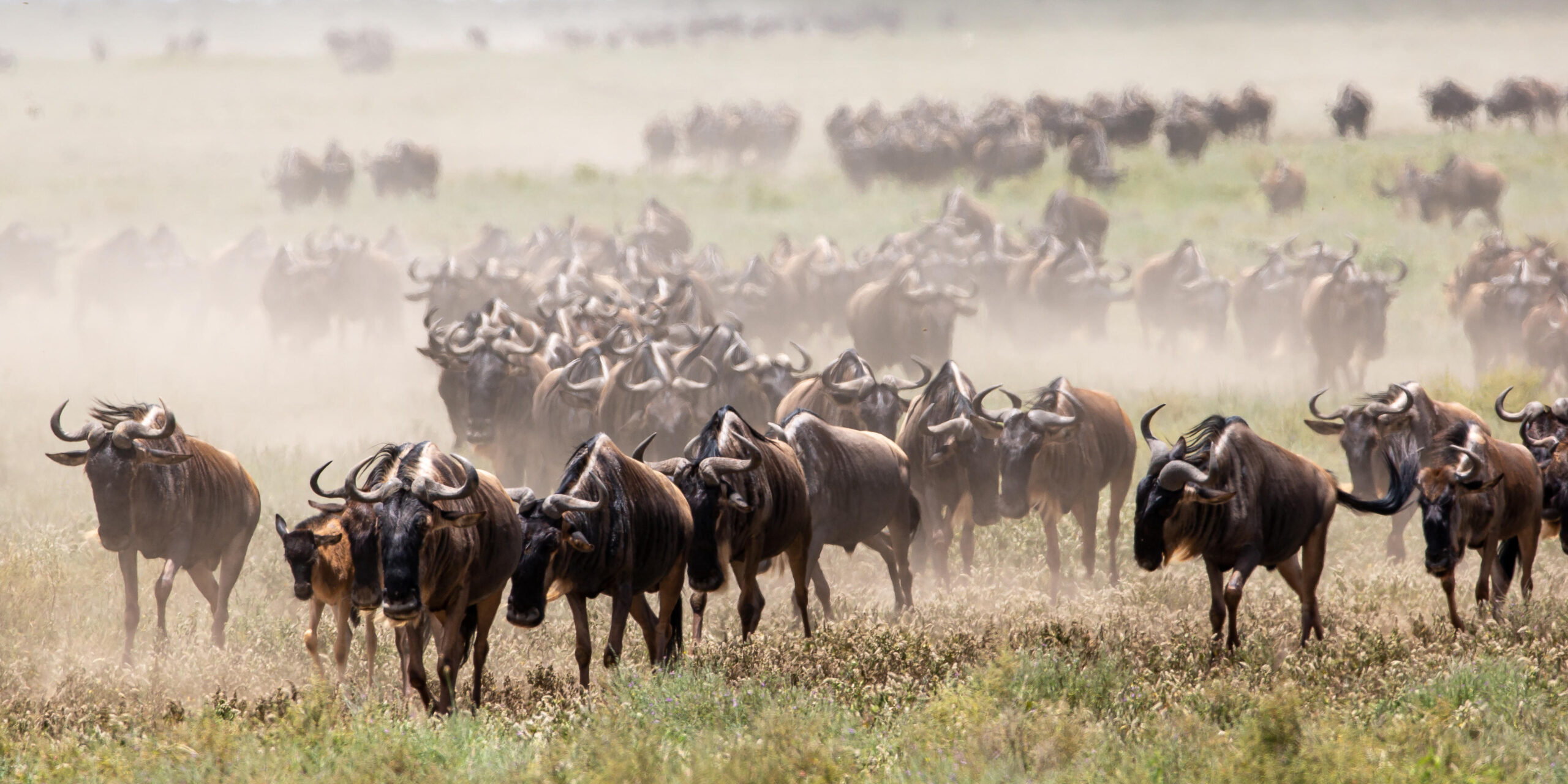
Over a million wildebeest move across the Serengeti in a continuous cycle driven by instinct, survival, and the search for fresh grazing. Alongside them, zebras and gazelles follow.
Predators wait.
Rivers become battlegrounds.
And every moment feels alive with tension and movement.
The park is also famous for its predators, including lions, leopards, cheetahs, hyenas, and wild dogs, making it one of the most sought-after game viewing destinations in Africa.
This is not just a safari.
This is one of the greatest natural spectacles on the planet.
At Go Do Africa, we believe the Serengeti is where safari becomes something unforgettable where every game drive holds the possibility of witnessing something extraordinary.
The Serengeti is part of the Serengeti-Mara Ecosystem, spanning about 30,000 square kilometers (12,000 square miles), making it one of the largest and most protected ecosystems on Earth.
In this guide, we’ll show you how to experience the Serengeti and the Great Migration in a way that is immersive, seamless, and truly remarkable.
What is the Great Migration?
The Great Migration is a year-round movement, with specific patterns of movement related to seasons and geography, involving over 1.5 million wildebeest, accompanied by hundreds of thousands of zebras and gazelles.
They move in a circular pattern across Tanzania’s Serengeti and Kenya’s Masai Mara, following rainfall and fresh grass as part of the Serengeti-Mara ecosystem.
But this isn’t a single event.
It’s a continuous journey.
- Calving season in the south
- Movement across the central plains
- River crossings in the north
Each year, around two million wildebeest begin their migration, facing perilous river crossings, stampedes, and predators, all to follow the annual grazing shift.
Each phase offers a different experience and a different kind of drama.
The migration is characterized by massive herds of wildebeest and zebras, which can stretch for about 40 kilometers (25 miles) as they move across the Serengeti and into the Masai Mara. The river crossings generally occur from about May to September, although their exact timing cannot be predicted.
What Makes the Serengeti So Special?
The Serengeti is more than just a stage for the migration it’s one of the most iconic safari destinations in the world.
What sets it apart:
- Endless open plains that stretch as far as the eye can see
- Incredible predator density, including lions, cheetahs, and leopards
- Year-round wildlife viewing, even beyond the migration
- UNESCO World Heritage status, protecting its ecosystem
The dry season (July–October) is the best time for wildlife viewing in the Serengeti, as animals gather at waterholes. For optimal wildlife viewing, the best time to visit is between January and March, when the environment is lush and green and there are fewer crowds.
The Serengeti’s two rainy seasons, from November to December and April to May, are generally mild and do not significantly disrupt wildlife viewing.
The scale here is hard to describe and impossible to forget.
Regions of the Serengeti
The Central Serengeti doesn’t try to impress you it simply spreads before you in endless golden grassland, alive with movement.
This is where the park’s heartbeat is strongest, where elephants move like slow gray ships across the plains and lions sprawl under scattered acacia trees. The landscape opens itself to you here, making every game drive feel effortless as herds shift and graze across horizons that seem to stretch forever.
Head north, and you’ll find yourself in a different world entirely. The Northern Serengeti feels remote in the best way quieter, wilder, where the Mara River cuts through the landscape like a lifeline.
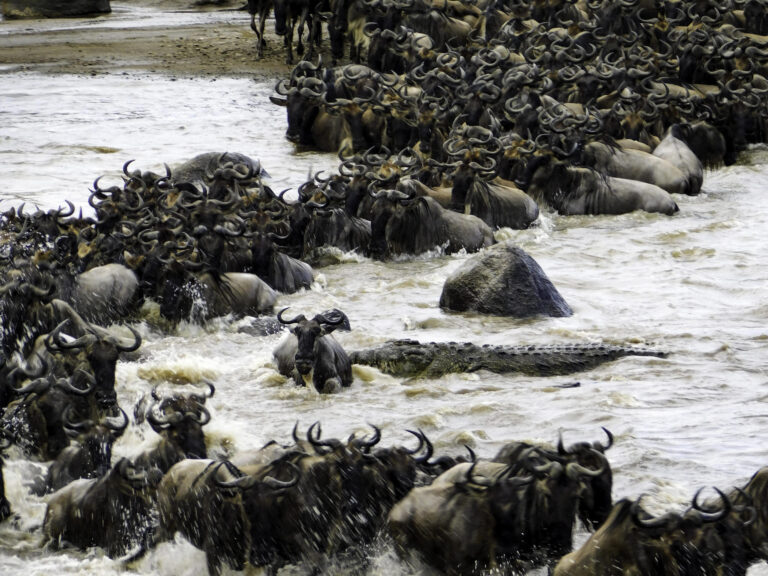
When the migration reaches these waters, you’ll understand why guides speak of it in hushed tones. Wildebeest gather at the river’s edge, hesitating, sensing danger, before the first brave souls plunge in and thousands follow.
The Southern Serengeti transforms completely between December and March. These wide-open plains become nature’s nursery, dotted with newborns taking their first wobbly steps.
You’ll hear it before you see it the constant bleating of calves, the soft thunder of hooves on grass. Predators know this timing too, creating a raw honesty about survival that’s both beautiful and sobering to witness.
Travel west toward the Grumeti River, and the landscape softens into something more intimate. The Western Corridor feels different greener, more sheltered, where the river winds between trees and rocky outcrops.
The crossings here happen quieter than at the Mara, but they’re no less meaningful. You’ll watch animals navigate these familiar waters with a patience that speaks to countless generations before them.
All of this connects seamlessly with Kenya’s Maasai Mara, creating something larger than any single park boundary. Animals don’t see borders they follow ancient paths between countries, following rainfall and grass growth just as they have for millennia.
This is what makes the Serengeti ecosystem extraordinary: it’s not just a destination, but a living, breathing landscape where wildlife moves freely across one of Africa’s last great wildernesses.
When to Visit the Serengeti (Migration Calendar)
Timing your safari is key to experiencing the migration.
January – March: Calving Season (Southern Serengeti)
Thousands of wildebeest calves are born within weeks.
- High predator activity
- Emotional, raw wildlife encounters
April – June: Movement Across the Plains
The herds begin moving north.
- Dramatic landscapes
- Fewer crowds
July – October: River Crossings (Northern Serengeti)
This is the most famous phase.
Wildebeest cross crocodile-filled rivers in chaotic, high-stakes moments.
- Peak safari season
- Unpredictable, unforgettable sightings
November – December: Return South
The cycle continues as herds move back toward the southern plains. Quieter, transitional period
What to Expect on a Serengeti Safari
Game Drives Like Nowhere Else
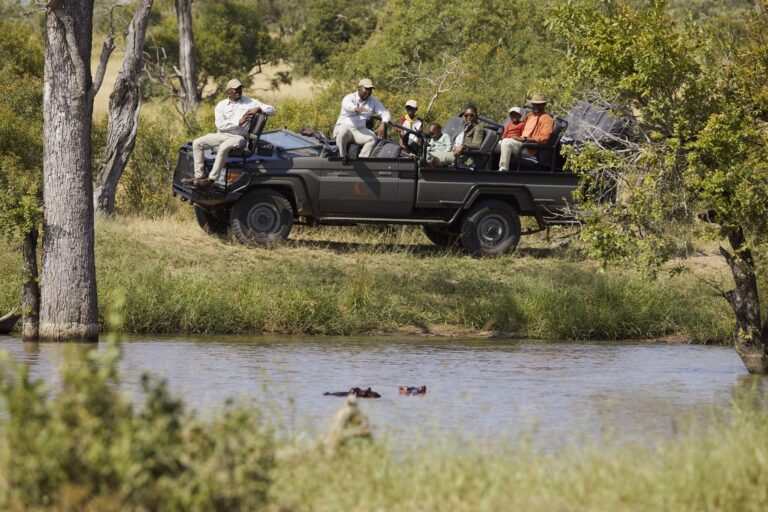
Game drives are a popular safari activity in the Serengeti, allowing visitors to explore the park with expert guides and view a variety of wildlife, including the Big 5. The vast openness of the Serengeti makes wildlife easier to spot.
You may witness:
- Great game drives that showcase the region’s incredible biodiversity
- Predators on the hunt
- Massive herds moving across plains
- Unexpected encounters at every turn
Mobile Camps (Following the Migration)
Luxury mobile camps move with the herds, placing you in the heart of the action.
- Front-row access to migration events
- Intimate, immersive experience
Hot Air Balloon Safaris
Experience the magic of a hot air balloon safari, also known as a balloon safari, as you float above the Serengeti at sunrise.
This unforgettable adventure offers a bird’s eye view of the vast plains, allowing you to witness the scale of the migration and observe wildlife and landscapes from a unique and memorable perspective.
From above, the scale of the migration becomes even more powerful.
Wildlife Beyond the Migration
Even without the migration, the Serengeti is exceptional.
You may see:
- Lions in large prides, sometimes feeding on a fresh kill, offering the chance to observe their natural behavior up close
- Cheetahs hunting in open plains
- Leopards resting in trees
- Elephants, giraffes, hippos especially at the Hippo Pool buffalo, antelope, wild dogs, and more
- The Serengeti bush provides an authentic environment for wildlife encounters, bird watching, and other immersive activities. This is a complete safari destination not just a seasonal one.
Where to Stay in the Serengeti
Luxury Lodges
Permanent structures with high-end amenities
Ideal for comfort and stability
Mobile Camps
- Move with the migration
- Offer immersive, close-to-nature experiences
Both options provide incredible access to wildlife the choice depends on your travel style.
Budget and Cost
The Serengeti doesn’t just offer wildlife it opens its arms to travelers with dreams as varied as their budgets. Your safari here can unfold in countless ways, starting with thoughtful camps and shared game drives around $200 per person daily, where comfort meets the raw beauty of these endless plains.
When your vision reaches toward luxury, exclusive mobile camps and premium lodges welcome you with experiences that can exceed $1,000 daily complete with meals that rival the sunset, spa treatments under African skies, and wines that taste different when elephants roam nearby.
Timing shapes everything in the Serengeti, just as the rains shape the land itself. When the Great Migration reaches its most powerful moments, rates naturally rise with the drama unfolding across these ancient grasslands.
Hot air balloon safaris and walking safaris become especially sought after during these peak months, and while they add to your investment, they offer something priceless perspectives of this vast ecosystem that will stay with you long after you return home.
Planning your safari means thinking about the full tapestry of experiences calling to you, whether that’s the classic rhythm of morning game drives or the indulgence of afternoon spa treatments.
Booking early gives you choices, and traveling when the migration quiets can help your budget stretch further. This isn’t about compromise it’s about finding the perfect balance between the experience you’re dreaming of and the investment that feels right for your journey.
How to Get to the Serengeti
Travel typically involves:
- International flight to Tanzania (Arusha or Kilimanjaro)
- Light aircraft transfer into the Serengeti
Flights over the plains are part of the experience, and many visitors join an organized tour that includes transfers and guided experiences.
Nearby Attractions
The Serengeti draws you in, but the landscape around it holds secrets that deepen the journey. Ngorongoro Crater spreads before you like nature’s own colosseum a UNESCO World Heritage Site where wildlife moves through ancient volcanic walls, and the Big Five roam in concentrated abundance that makes for unforgettable game drives.
Not far away, Lake Manyara unfolds with surprising contrasts: flamingos wading through alkaline shallows, lions resting impossibly high in acacia branches, and birdlife that shifts with the light and seasons.
When you cross into Kenya, the Maasai Mara extends the story part of the same ecosystem that pulses with the rhythm of migration and predator-prey drama. Here, the Mara River becomes a stage where thousands of wildebeest gather courage before their leap into crocodile-watched waters.
The experience grows richer when you sit with Maasai warriors in their villages, learning how traditional life flows alongside the land’s natural cycles, connecting you to the deeper currents that shape this region.
Kilimanjaro rises on the horizon like Africa’s exclamation point its snow-touched peak visible from surprising distances across the savanna. Whether you choose to trek its slopes or simply watch how it changes the skyline from your safari vehicle, the mountain adds weight to your time here.
These places don’t just surround the Serengeti; they complete it, turning your journey into something that moves between landscapes, cultures, and experiences that belong together.
Who is the Serengeti Best For?
- First-time safari travelers, especially those seeking their first safari Serengeti is ideal for a first safari experience due to its renowned wildlife and unspoiled environment.
- Wildlife enthusiasts
- Photographers
- Travelers seeking iconic African experiences
The Serengeti delivers on every level. Visitors can explore the region in a variety of ways, making each trip unique. A safari here is not only thrilling but also fun and an incredible experience.
Opting for a seven-day itinerary allows for a comprehensive exploration of the Serengeti and its key game drive locations.
Tips for Experiencing the Great Migration
- Be flexible the migration moves unpredictably
- Stay multiple nights in one area
- Choose camps based on current herd locations
- Consider booking a guided tour for expert planning and seamless logistics
- Trust expert planning it makes all the difference
Responsible Tourism
The Serengeti calls to you, and that call comes with something beautiful the chance to be part of preserving what you’ve come to witness. Your safari operator becomes your partner in this.
You’ll want someone who moves through the landscape with respect, who understands that every tire track matters, every waste decision counts. The best operators don’t just show you the Serengeti they help you tread lightly through it, supporting the conservation work that keeps this ecosystem breathing.
When you connect with local communities, something shifts. You’re no longer just passing through you become part of the story.
Whether you’re running your hands over hand-carved crafts in a Maasai market, walking alongside community guides who know every bird call and seasonal change, or joining tourism initiatives that put resources directly into local hands, you’re weaving yourself into the fabric of this place. These moments create ripples that extend far beyond your visit.
The wildlife here moves with an ancient rhythm, and your presence becomes part of that dance when you approach it right.
Those lions lounging in afternoon shade, the elephants moving like gentle giants through the grassland, the thundering wildebeest, the cheetahs built for speed they’re trusting you to watch from a respectful distance.
When you follow the park’s guidance and support conservation programs, you’re not just observing the Serengeti’s magic. You’re ensuring it continues long after your footprints fade from the savanna dust.
Why the Serengeti is Unforgettable
There’s a scale to the Serengeti that stays with you long after you leave. It’s not just the sheer number of animals that roam the vast plains, but the dynamic movement and constant tension that fills the air. Every moment feels charged with anticipation, as if something extraordinary is about to unfold.
The Serengeti’s diverse landscapes from endless open plains to rocky kopjes and shaded riverbanks create a natural habitat that supports an incredible variety of wildlife. This diversity means that on any game drive, you might witness a lion pride lounging in the sun, a cheetah sprinting after prey, or a herd of elephants moving majestically across the horizon.
What makes a Serengeti safari truly exceptional is the feeling of being immersed in a living, breathing ecosystem.
The raw power of nature is palpable here, from the thunderous hooves of migrating wildebeest to the stealthy approach of predators hunting their next meal. It’s a place where life and death play out in real time, and every encounter is charged with emotion.
A Serengeti safari is more than just a wildlife viewing trip it is a profound, unforgettable experience that connects you to the heart of Africa’s wilderness.
Closing
The Serengeti is not just a destination; it’s one of the last great wildlife theaters on Earth, a place where nature’s most compelling dramas unfold on a vast stage. Its unparalleled wildlife diversity, exceptional views, and the timeless spectacle of the Great Migration make it a must-visit for any safari adventure.
The Great Migration is the Serengeti’s most powerful story a continuous, awe-inspiring journey that embodies the resilience and rhythm of life in the wild. Witnessing this natural phenomenon offers a rare glimpse into the cycles that have shaped this landscape for millennia.
Whether you are a first-time safari traveler or a seasoned wildlife enthusiast, the Serengeti promises experiences that will stay with you forever. From the remote corners of the western Serengeti to the wide-open serengeti plains and the dramatic river crossings near the Kenyan border, every moment spent here is a chance to connect deeply with nature.
Plan your Serengeti safari during the peak season to maximize your chances of seeing the migration and other wildlife highlights, and consider staying in luxury lodges or mobile camps that bring you closer to the action. With its diverse landscapes, rich natural habitat, and vibrant wildlife, the Serengeti offers a safari adventure that is truly exceptional from start to finish.
In the end, the Serengeti is more than just a park it’s a profound journey into the heart of Africa’s wilderness that leaves a lasting imprint on your soul.
Frequently Asked Questions (FAQ)
What is the best time to visit the Serengeti for the Great Migration?
The best time to visit the Serengeti for witnessing the Great Migration depends on what you want to see. The river crossings typically occur from May to September, with peak safari season being July to October. For calving season and lush green landscapes, January to March is ideal.
Can I see baby animals on a Serengeti safari?
Yes, especially during the calving season from January to March in the southern Serengeti, when thousands of wildebeest calves are born. This period offers unique opportunities to see baby animals and increased predator activity.
What nearby attractions can I visit along with the Serengeti?
The Ngorongoro Conservation Area and Lake Manyara are popular nearby destinations. Ngorongoro Crater offers abundant wildlife in a unique volcanic caldera, while Lake Manyara is known for its flamingos and tree-climbing lions.
Are there luxury accommodation options available in the Serengeti?
Yes, the Serengeti offers a range of accommodation including luxury lodges and premium mobile camps that move with the migration. These provide high-end amenities and immersive safari experiences.
Is it possible to combine a Serengeti safari with a visit to Mount Kilimanjaro?
Absolutely. Many travelers combine their Serengeti safari with a trek or visit to Mount Kilimanjaro or its foothills, enriching the whole trip with diverse landscapes and activities.